Real Talk · 5 min read
Natural Garlic Flavouring: What it actually is
If you've been navigating food sensitivities for any length of time, you've probably encountered the phrase "natural flavouring" in places that surprised you. It appears on premium spice blends marketed as garlic-free. It appears in low FODMAP labelled products. It appears in dressings and sauces designed for sensitive stomachs.
So what is it? And does it actually matter?
What is "natural flavouring" legally?
Under EU and UK food labelling law, "natural flavouring" is a defined category. It refers to flavour compounds extracted from food sources through processes recognised as natural, typically distillation, extraction, fermentation, or enzymatic processing. The starting material must be a food, herb, or spice.
What it doesn't have to do is tell you which food, herb, or spice the flavour came from.
A bottle of dressing can list "natural flavouring" without specifying whether that flavour came from garlic, onion, celery, tomato, or any other source. The flavour is "natural" in the regulatory sense, but the source is unspecified.
This is the legal loophole that allows products to be marketed as "free from" specific ingredients while still containing flavour compounds derived from those ingredients.
How is natural garlic flavouring made?
Several methods are used, but the most common is enzymatic extraction. Fresh garlic is broken down using enzymes that release the sulphur compounds responsible for its characteristic flavour. These compounds are concentrated and stabilised, then added to other products in small quantities.
The result is a highly concentrated flavour compound that delivers most of the sensory experience of garlic without the bulk. A few drops can flavour an entire batch of dressing.
Does natural garlic flavouring trigger IBS?
This is the question that matters. And the honest answer is: probably yes, for most people.
The FODMAPs in garlic that trigger IBS symptoms, primarily fructans, are water-soluble compounds present in the bulb itself. The flavour compounds that natural flavouring concentrates, primarily sulphur compounds, are different molecules.
In theory, you could extract garlic flavour without extracting fructans. In practice, most commercial natural garlic flavouring is made from the whole bulb and contains both flavour compounds and fructans, just in concentrated form.
This means natural garlic flavouring is biochemically the same problem as fresh garlic, just smaller in volume and harder to spot on a label.
For people with sensitive IBS, the safest approach is to assume natural garlic flavouring will trigger symptoms unless the manufacturer can confirm otherwise. Most cannot.
What stellaVie does differently
stellaVie blends contain no natural garlic flavouring, no garlic-infused oils, no garlic extracts, no allium derivatives of any kind. When we say no garlic, we mean no garlic compounds, full stop.
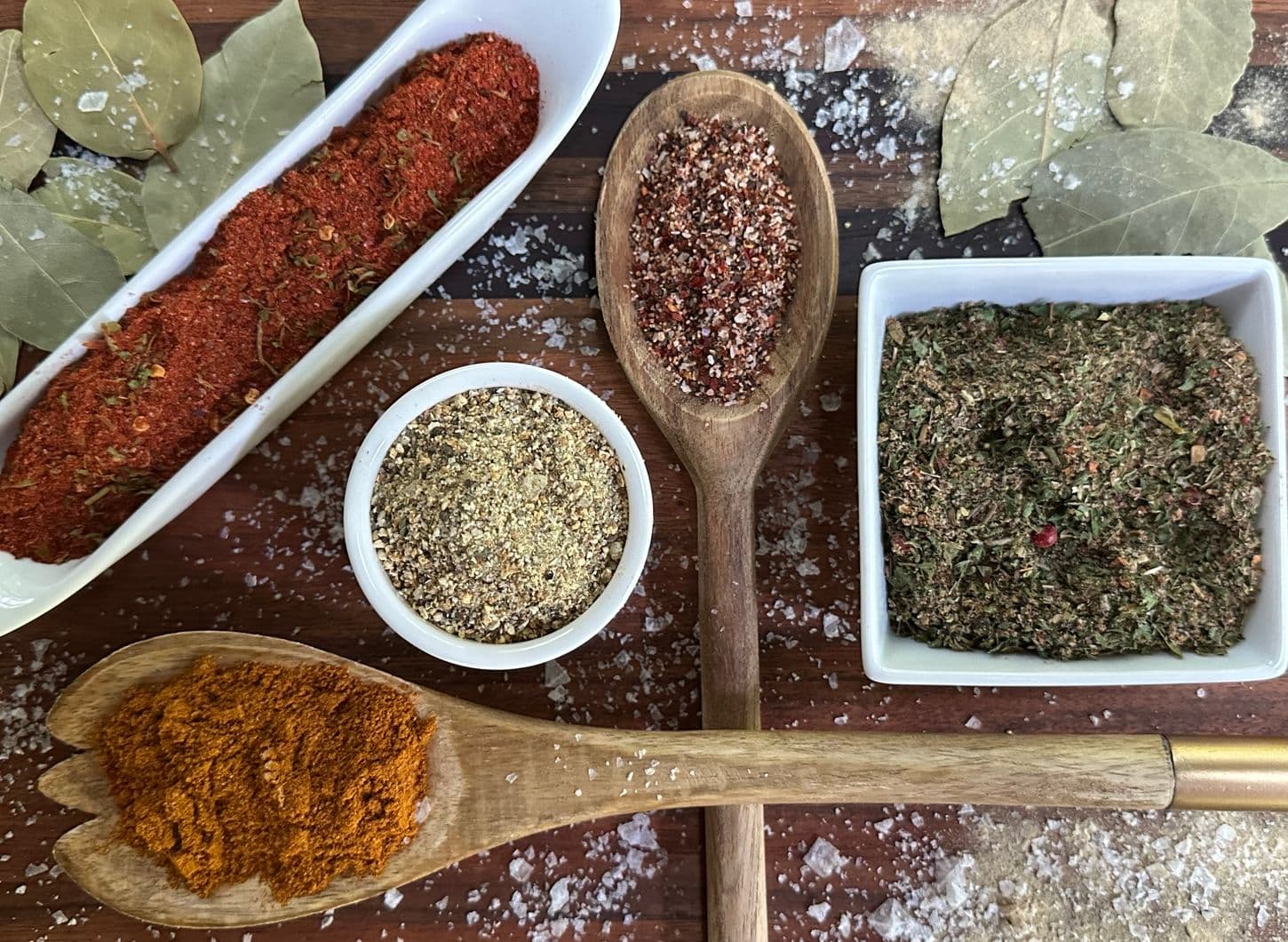
The flavour depth in stellaVie blends comes from other sources: sumac for tang, carrot powder for sweetness, smoked paprika and amchur for body, Aleppo pepper for slow-building warmth. Building flavour without garlic takes more thought, more layering, and a wider ingredient list. We did the work.
Every ingredient on every stellaVie label is the actual ingredient. Nothing extracted, nothing concentrated, nothing translated into a more flattering name. If sumac is in the bottle, the label says sumac.
The one ingredient we should name here
One stellaVie ingredient has the word natural in it, and an essay about that word should say so rather than hope you don't check. Smoke & Flame contains natural hickory smoke powder.
It isn't the thing this article is about, and the difference is the whole point of the article. "Natural flavouring" is a category that legally conceals its source: you cannot tell from the label whether it came from garlic, onion, celery or tomato. "Natural hickory smoke powder" names its source and its process in the ingredient itself. You know it's hickory, you know it's smoke, you know it's a powder. There is nothing to look up and nobody to email.
It is still the least plain thing on any of our labels, and we would rather point at it ourselves than have you find it. It contains no garlic and no allium of any kind. If Smoke & Flame is ever reformulated without it, this section goes and the ingredient list gets shorter by one.
Learn more about hidden garlic in everyday foods →