Skip to content

Real Talk · 6 min read

Hidden Garlic: Where it lives in your kitchen
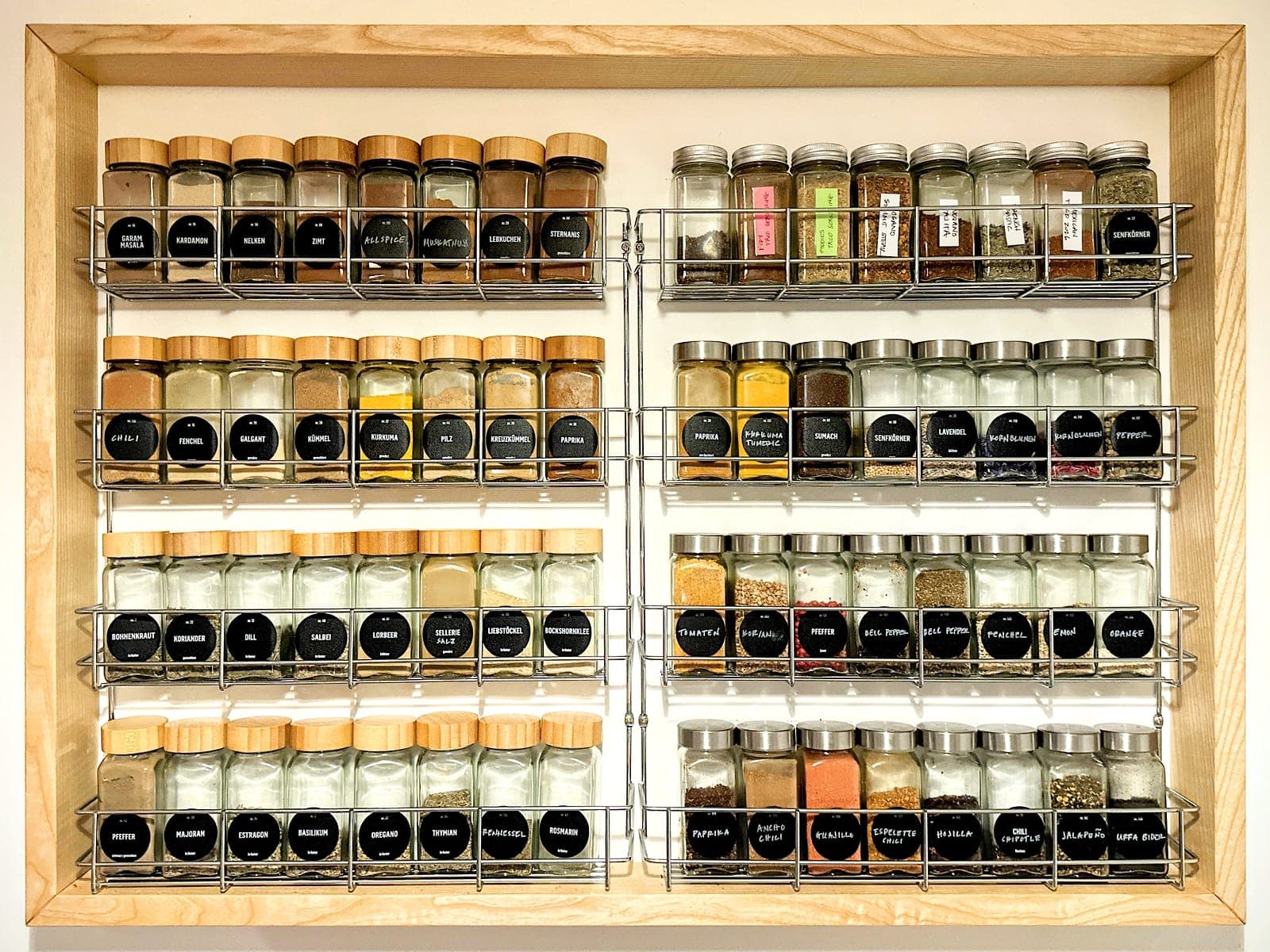
Candace's own spice wall, straight on: a pale wooden frame on a white wall holding two wire racks of four shelves, eight glass jars to a shelf. Most jars carry a round black label, printed or handwritten and mostly in German: Garam Masala, Nelken, Zimt, Sternanis, Kurkuma, Kreuzkümmel, Sumach, Lorbeer, Liebstöckel, Majoran, Thymian, Rosmarin, and a bottom shelf of chillies from Ancho Chili to Urfa Biber. On one of the top shelves most jars are labelled on slips of paper instead.
every jar named — which is the whole argument

When you have IBS or a garlic sensitivity, the first thing you learn is that garlic doesn't have to be listed as garlic.

It hides behind "spices," behind "natural flavouring," behind "garlic-infused oil," behind "allium." It's in salad dressings labelled "Italian herb." In bouillon cubes that look completely benign. In premium "garlic-free" spice blends that contain garlic compounds extracted through different processes.

This is the most quietly frustrating part of cooking with food sensitivities — the work of detective fiction every time you scan a label.

Why does garlic matter so much for IBS?

Garlic contains fructans, a type of FODMAP (Fermentable Oligosaccharides, Disaccharides, Monosaccharides, and Polyols). Fructans are difficult for the small intestine to absorb. When they reach the large intestine, gut bacteria ferment them — producing the gas, bloating, cramping, and digestive distress that defines IBS for many people. This applies whether you eat a whole roasted bulb of garlic or consume garlic via a concentrated extract. The molecules trigger the same response. The amount that triggers symptoms varies person-to-person. Some people tolerate small amounts of garlic-infused oil (the FODMAPs in garlic are water-soluble, not fat-soluble — so an oil infusion contains less fructan than fresh garlic). Many don't. The safest assumption: if you're sensitive to garlic, treat all forms with caution.

Where does garlic hide on a label?

The obvious names: garlic, garlic powder, garlic salt, garlic flakes, dehydrated garlic, garlic extract, garlic oil, garlic-infused oil. The less obvious names: onion (related fructan structure), allium (the plant family), leek, chives, shallot, scallion, spring onion, and any of these in powder, flake, oil, or extract form. The hardest names to spot: "Spices" as a single ingredient (can legally contain garlic without further declaration); "Natural flavouring"/"natural flavours" (can include garlic-derived compounds); "Yeast extract" (sometimes contains garlic in trace amounts); "Herb blend"/"seasoning" (same problem as "spices"); "Stock concentrate" (usually contains garlic).

Which products are most likely to hide garlic?

In order of frequency: 1. Stocks, bouillons, and broth pastes. 2. Salad dressings and condiments. 3. Ready meals and frozen prepared foods. 4. Crisps and savoury snacks. 5. Crackers and savoury baked goods. 6. Marinades and sauces. 7. "Italian herb" or "Mediterranean" seasoning blends. 8. Some "garlic-free" branded products that use natural flavouring as a workaround.

What should you do at the supermarket?

The honest answer: develop the muscle of reading ingredient lists every time, even on products you've bought before. Brands reformulate. Suppliers change. The "garlic-free" version you bought last month may have been quietly replaced with a "natural flavouring" version this month. When a label says "spices" without further detail and you're not sure, contact the manufacturer. Most will respond to direct questions about specific ingredients. If they won't tell you what's in "spices," that's information in itself. For products that are repeatedly in your cupboard, find brands that name every ingredient individually. That's not just a trust signal — it's a practical reality of living with food sensitivities.

What stellaVie does differently

Every stellaVie blend names every ingredient on the label. No catch-all "spices." No "natural flavourings." If a blend contains sumac and savory and parsley, those words appear on the label — exactly as they appear in the bottle. The brand exists because the founder, Candace, got tired of doing detective work on her own kitchen cupboard. Every bottle is the answer to "what's actually in this?"

Use the stellaVie Label Reader to paste any ingredient list and check for hidden garlic, onion, and common allergens.