Real Talk · 7 min read
What FODMAP-friendly cooking actually means
The FODMAP framework is one of the most useful things to have happened in food science in the last twenty years, and one of the most poorly explained. People who've heard of it usually associate it with the elimination diet you do for six weeks under a dietitian's supervision when your GP suspects IBS. The phrase "low FODMAP" gets used the way "low fat" or "low sugar" got used in the 1990s — as a marketing claim, often without anyone being clear about what it means.
FODMAP-friendly cooking is something narrower and more interesting. It's not a diet. It's an awareness — that certain categories of carbohydrate, when they reach the large intestine undigested, become food for gut bacteria, which produces fermentation, which produces the symptoms that something like a third of adults with IBS know well: bloating, cramping, irregularity, the heavy feeling you get after a meal that should have made you feel light.
The acronym stands for Fermentable Oligosaccharides, Disaccharides, Monosaccharides, And Polyols. The categories cover specific sugars and fibres found in specific foods. Garlic and onions are high in oligosaccharides called fructans. Apples are high in fructose. Milk products are high in lactose. Sugar-free gum is high in polyols. The categories don't map neatly to "foods that sound healthy" or "foods that sound unhealthy" — many extremely nutritious foods are high-FODMAP, and many indulgent foods are low-FODMAP. The framework cuts across moral categories of food in a way that's quite freeing once you understand it.
FODMAP-friendly cooking is the freedom to cook food that tastes good — onto a foundation that doesn't include the specific ingredients you're sensitive to.
What FODMAP-friendly is, and what it isn't
FODMAP-friendly cooking is not a permanent diet for most people. The classic protocol — six weeks elimination, then systematic reintroduction to identify which categories you personally react to — is a diagnostic tool, not a way of life. After reintroduction, most people end up tolerating most foods in most quantities, with one or two specific categories they need to be careful about.
In my case, the categories I genuinely react to are alliums (the fructan family — garlic, onion, leeks, shallots) and, to a lesser extent, polyols (the sugar alcohols in stone fruits and artificial sweeteners). I can eat apples in moderate quantities, lactose doesn't bother me, beans are fine if I cook them properly, wheat is fine. The framework gave me clarity about what was triggering my symptoms, after which I could stop being cautious about everything and be specifically cautious about the things that actually mattered.
This is the part that doesn't get explained well. Most people who eat FODMAP-friendly long-term do so because they have identified one or two specific categories they react to, not because they avoid the whole framework. The cooking they do is not restrictive. It is targeted.
So when stellaVie says "crafted with FODMAP-friendly ingredients," we're being precise. Those blends are made without the high-FODMAP ingredients (garlic, onion, leek, shallot) that the largest percentage of FODMAP-sensitive people react to. They're not certified by Monash University or anyone else, because we haven't pursued formal certification — but they're built from FODMAP-friendly ingredients you can verify yourself by reading the label. That's the point: transparency rather than certification, awareness rather than restriction.
The cooking implications
Once you understand FODMAP-friendly cooking as a framework rather than a diet, the practical implications get interesting. You stop thinking about what you can't have and start thinking about what to build cooking around.
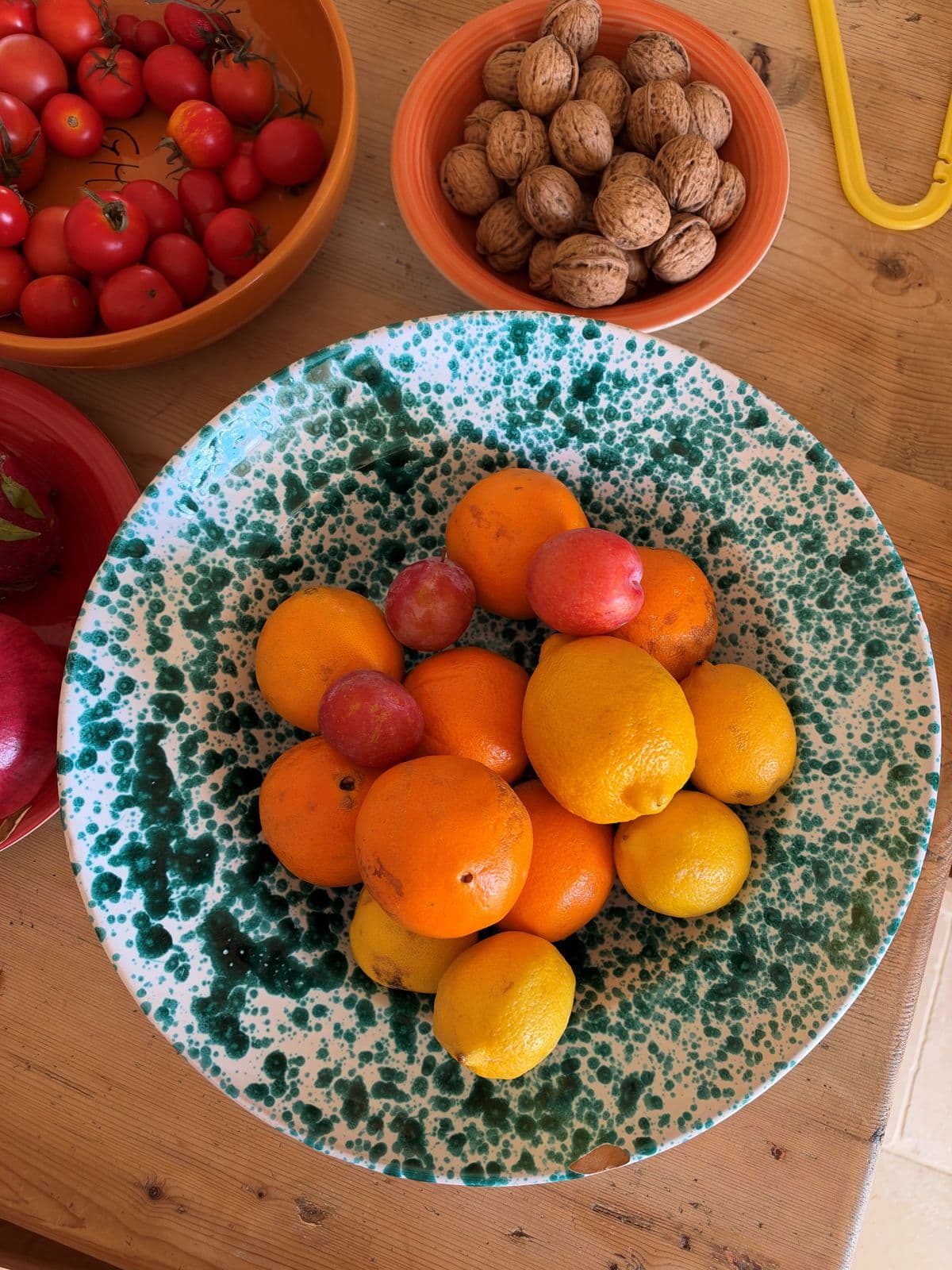
Citrus is your friend. Lemon, lime, orange — all low-FODMAP in usable quantities, all capable of brightening food the way garlic brightens food but in a different register. A squeeze of lemon over roast chicken does much of the work garlic-roasted chicken does, in a different idiom.
Herbs are your friend. Basil, oregano, thyme, rosemary, tarragon, sage, parsley, mint, dill — almost all herbs are low-FODMAP. They were the original flavour amplifiers before alliums became culturally dominant. A lot of the great herb-led cooking traditions of the Mediterranean and the Middle East are essentially low-FODMAP by default.
Sumac is your friend. It's a Middle Eastern berry that's been dried and ground into a tart purple powder. It does much of what tomato paste does — adds umami, depth, brightness — without being a nightshade or a high-FODMAP food. If you've never cooked with it, you should.
Spring onion tops are your friend, but only the dark green parts. The white bulbs are high-FODMAP. The dark green tops, somehow, aren't. This is one of those quirks of the framework that delights me — you can have the visual signal of allium without the digestive load.
FODMAP-friendly cooking is not Mediterranean cooking with the garlic taken out. It is its own framework with its own structure, drawing on traditions that have always built flavour without dependence on alliums.
Fennel pollen, used sparingly, replaces some of the aromatic complexity that garlic provides. It is expensive but a little goes a long way.
Asafoetida (hing), used carefully, mimics the flavour of garlic and onions surprisingly well. This is an old trick from Indian cooking, where Ayurvedic traditions have long avoided alliums on principle. Sattvic cooking treats garlic and onions as tamasic — heavy, agitating, ill-suited to the calm body — and uses hing instead. The technique works.
And there's something I think about often: FODMAP-friendly cooking is not Mediterranean cooking with the garlic taken out. It's its own framework with its own structure, drawing on traditions — Provence, Lebanon, Ayurvedic India, certain strains of Japanese and Persian cooking — that have always built flavour without dependence on alliums. When you cook this way, you're not subtracting. You're choosing a different vocabulary.
Where stellaVie fits
Four of our blends carry that line: French Citrus, Bright Pepper, Chilli Libre and Smoke & Flame. Each is built from the vocabulary I described above — herbs and citrus and sumac and pepper and chili, with allium absent not because we forgot but because we built without it. The others don't carry it, and we say so on each one rather than rounding up.
The point isn't that FODMAP-friendly cooking is better than ordinary cooking. The point is that it's a real, useful, interesting framework that doesn't require giving up on flavour. Cooking with this awareness is cooking with more attention, not less. The blends we make are the blends I wanted to find when I was looking for them and couldn't.